Healthy gums are the foundation of a beautiful smile. At Issa Dental Group, we offer gentle yet thorough deep cleaning teeth treatments to stop gum disease, remove buildup below the gumline, and restore your oral health.
If your gums bleed when brushing, feel tender, or appear swollen, you may need a deep dental cleaning — a specialized procedure that goes beyond your regular dental cleaning. Our expert team uses the latest techniques to ensure your comfort while delivering exceptional results.
Let’s Take Care of Your Smile!
Offering comprehensive dental services with comfort, care, and precision.

What Is a Deep Dental Cleaning?
A deep cleaning dental (also called scaling and root planing) is a non-surgical treatment designed to clean below the gumline, where regular brushing and flossing can’t reach.
During the procedure, our deep cleaning dentist removes plaque, tartar, and bacteria from the roots of your teeth to prevent infection and promote gum healing.
The treatment helps:
- Stop the progression of gum disease (periodontitis).
- Eliminate bacteria and plaque under the gums.
- Smooth the roots to help gums reattach.
- Prevent tooth loss and bone damage.
- Periodontal disease surgery.
Think of deep teeth cleaning as a reset for your mouth — removing the hidden buildup that causes inflammation, bad breath, and gum recession.
Book an appointment
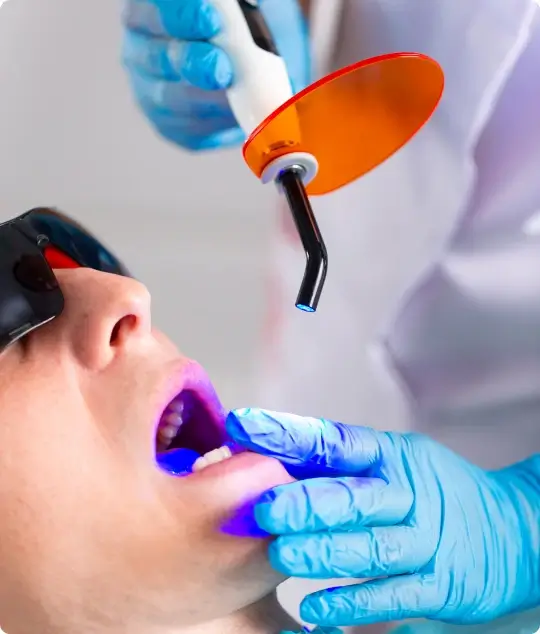
Signs You May Need a Deep Cleaning Dental Treatment
You may need a deep cleaning dentist appointment if you experience:
- Persistent bad breath.
- Swollen or bleeding gums.
- Gum tenderness or pain when chewing.
- Gum recession (teeth appearing “longer”).
- Loose or shifting teeth.
- A diagnosis of gingivitis or early periodontitis.
During your check-up, our dentists will measure the spaces between your teeth and gums (called “pocket depths”). If these pockets are deeper than 4 millimeters, a dental deep cleaning is often recommended to prevent further damage.
Book an appointmentOur Deep Cleaning Teeth Procedure
At Issa Dental Group, your comfort and safety are our top priorities. Here’s what you can expect from your deep dental cleaning appointment:
Comprehensive Evaluation
We begin with a full-mouth examination and digital X-rays to assess your gum health and identify problem areas.
Visual and Digital Examination
A mild anesthetic is applied to numb your gums and ensure a pain-free experience.
Scaling
Our skilled hygienist removes plaque and tartar from above and below the gumline using advanced ultrasonic and manual instruments.
Root Planing
The roots of your teeth are smoothed to prevent future buildup and encourage gum reattachment.
Antibacterial Treatment (If Needed)
We may apply an antibacterial rinse or medication to eliminate any remaining bacteria and promote healing.
Comprehensive Evaluation
We begin with a full-mouth examination and digital X-rays to assess your gum health and identify problem areas.
Local Anesthesia for Comfort
A mild anesthetic is applied to numb your gums and ensure a pain-free experience.
Scaling
Our skilled hygienist removes plaque and tartar from above and below the gumline using advanced ultrasonic and manual instruments.
Root Planing
The roots of your teeth are smoothed to prevent future buildup and encourage gum reattachment.
Antibacterial Treatment (If Needed)
We may apply an antibacterial rinse or medication to eliminate any remaining bacteria and promote healing.
The procedure may take one or two visits, depending on the severity of buildup and the number of teeth involved.The procedure may take one or two visits, depending on the severity of buildup and the number of teeth involved.

Deep Cleaning Teeth Before and After: What to Expect
Patients often see remarkable improvement in their oral health and comfort after a deep cleaning dental procedure.
- Before: Gums may be swollen, bleed easily, and feel sore. Breath may have a persistent odor, and plaque or tartar may be visible near the gumline.
- After: Gums appear firmer, bleeding stops, and breath feels fresher. With proper care, gum pockets tighten, and teeth feel cleaner and more stable.
- We often recommend deep cleaning teeth before and after images to show patients how dramatically this treatment can improve gum health and the appearance of their smile.
Our periodontist takes time to explain each step, so you understand what’s happening and feel confident about your care.
Book an appointmentDeep Cleaning Teeth Cost
The deep cleaning teeth cost can vary based on your oral health, the number of teeth treated, and whether you have dental insurance.
Our team will review all costs with you beforehand, so there are no surprises — just clear, affordable dental care.
How Long Does a Deep Dental Cleaning Take?
A typical deep teeth cleaning appointment takes about 1 to 2 hours per session, depending on the extent of cleaning required. If you need a full-mouth deep cleaning, we may complete the treatment in two appointments to ensure comfort and thoroughness.
Recovery and Aftercare
Mild tenderness or sensitivity is normal for a few days after your deep cleaning dental procedure.
Here’s how to care for your gums during recovery:
- Rinse gently with warm salt water to soothe irritation.
- Avoid crunchy, spicy, or hard foods for 24–48 hours.
- Brush and floss gently with a soft-bristled toothbrush.
- Stay hydrated and maintain good oral hygiene.
Our team will provide personalized aftercare instructions to help your gums heal quickly and effectively.
Book an appointment
The Benefits of Deep Cleaning Teeth
A professional deep dental cleaning offers benefits far beyond fresher breath and cleaner teeth.
It helps you:
- Prevent gum disease progression.
- Reduce inflammation and bleeding.
- Protect against tooth and bone loss.
- Improve breath freshness.
- Enhance the longevity of your natural teeth and dental work.
By addressing issues early, you can avoid costly and invasive gum treatments later — making deep cleaning teeth a smart preventive investment in your long-term oral health.
Book an appointmentWhy Choose Issa Dental Group for Deep Cleaning Dental Services
At Issa Dental Group, we combine advanced technology with compassionate care to deliver outstanding results.
Our patients choose us for:
-
Experienced Dental Hygienists: skilled in periodontal therapy.
-
Personalized Care Plans: tailored to your gum health.
-
Comfort-Focused Techniques: and local anesthesia for pain-free treatment
-
State-of-the-Art Equipment: for precision and safety.
We are dedicated to helping you achieve a clean, healthy, and confident smile that lasts.
Frequently Asked Questions
For most patients, every six months is the standard recommendation. That said, if you have a history of gum disease, build up plaque quickly, or are in active periodontal treatment, your dentist or hygienist may suggest coming in every three to four months instead. The frequency is not one-size-fits-all, and we will help you figure out what makes sense for your situation.
A regular cleaning focuses on the surfaces of your teeth and just below the gumline, removing plaque and tartar that has built up since your last visit. A deep cleaning, also called scaling and root planing, goes further below the gumline to remove buildup from the roots of your teeth. It is typically recommended when there are signs of gum disease, such as deeper pocket measurements or bone loss. Your hygienist will let you know which one applies to you after a full evaluation.
A standard cleaning usually takes between 30 and 60 minutes, depending on how much buildup there is and whether X-rays are included. If it is your first visit with us, or if it has been a while since your last cleaning, it may take a little longer. We never rush through it.
Most patients find it comfortable. You may feel some pressure or mild sensitivity, especially if your gums are inflamed or if there is significant buildup in certain areas. If you are nervous or have sensitive teeth, let us know before we start. We can adjust our approach or use a numbing gel to keep things comfortable.
A professional cleaning will remove surface stains caused by coffee, tea, wine, or tobacco, leaving your teeth noticeably brighter. It is not the same as whitening, which changes the actual color of your enamel, but most patients are happy with how their teeth look after a good polish. If you want to go further, ask us about whitening options at your visit.
Plaque that is not removed hardens into tartar, which cannot be brushed away at home. Over time, this leads to gum inflammation, cavities, and eventually gum disease. Regular cleanings are one of the most straightforward ways to prevent problems before they require more involved treatment. Staying consistent is much easier on your mouth than catching up after a long gap.
Expert care for every stage of your dental health.
These treatments are commonly recommended alongside your cleaning as part of a complete preventive care visit.
Often paired with Deep Cleaning
 Often paired with Deep Cleaning



Made by Dentaloo: Dental Plan Platform