Whether you’re experiencing pain, infection, or a damaged tooth that cannot be saved, Issa Dental Group offers gentle, precise, and stress-free tooth extraction services. Our goal is always to preserve your natural teeth whenever possible — but when removal is necessary, you can trust our experienced clinicians to perform the procedure with advanced techniques and your comfort as the top priority.
If you’re searching for tooth extraction nearby, you’ve found the expert team that puts your safety and long-term oral health first.
Let’s Take Care of Your Smile!
Offering comprehensive dental services with comfort, care, and precision.

Why You May Need a Tooth Extraction
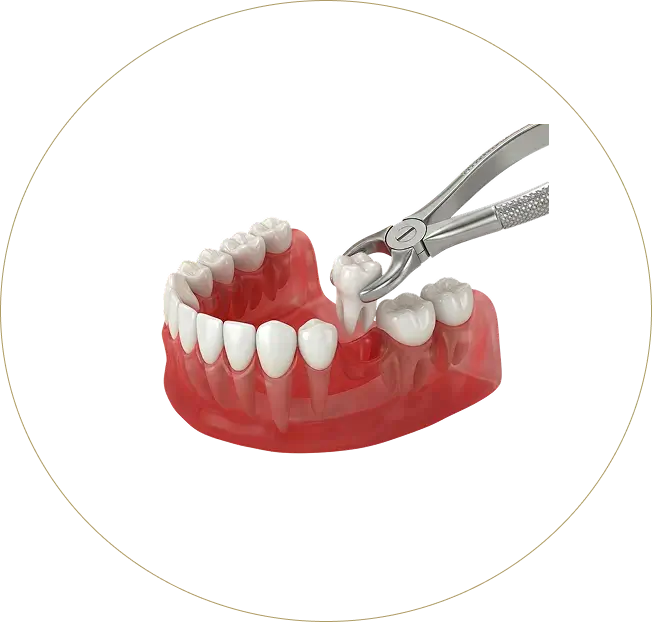
There are many reasons a tooth may need to be removed, including:
-
Severe tooth decay
-
Fractured or broken tooth beyond repair
-
Gum disease causing loose teeth
-
Impacted or problematic wisdom teeth
-
Advanced periodontal disease
-
Overcrowding prior to orthodontics
-
Deep infection or abscess
Our dentists use digital imaging and a comprehensive evaluation to determine whether extraction is the best option or if alternative treatments may save your tooth.
Book an appointmentTypes of Tooth Extractions We Provide

Simple Tooth Extractions
Used for teeth that are visible and easy to access, simple extractions are quick, safe, and performed using local anesthesia.
Surgical Tooth Extractions
For teeth that are broken at the gumline, impacted, or difficult to access, we perform surgical extractions that carefully remove both the tooth and surrounding structures when necessary.
Wisdom Tooth Extractions
If your wisdom teeth are causing pain, crowding, or infection, we provide comfortable removal and full guidance on extracted wisdom tooth healing.
Whether you need a single tooth removed or multiple extractions, our team ensures the procedure is efficient and comfortable.
Book an appointment
Tooth Extraction Cost — What to Expect
You may be wondering how much a tooth extraction costs. The final tooth extraction cost depends on several factors:
- Type of extraction (simple vs. surgical)
- Whether the tooth is impacted
- Location of the tooth
- Need for sedation
- Insurance coverage
The Root Canal Process at Issa Dental Group
We understand that the idea of a root canal can sound intimidating — but rest assured, with today’s modern dental technology and our gentle approach, the procedure is comfortable and straightforward.
Here’s what to expect:
Examination & Imaging
We begin with a complete examination, including X-rays, to evaluate the tooth and plan the safest approach.
Numbing & Comfort Options
We use modern anesthesia to ensure you remain comfortable and relaxed. Sedation options may also be available depending on your needs.
Tooth Removal
Using advanced extraction techniques, we carefully remove the tooth, preserving as much bone and tissue as possible to ensure faster healing.
Protection of the Socket
After the tooth is removed, we clean the site and may apply bone material or medication depending on your specific treatment plan.
Examination & Imaging
We begin with a complete examination, including X-rays, to evaluate the tooth and plan the safest approach.
Numbing & Comfort Options
We use modern anesthesia to ensure you remain comfortable and relaxed. Sedation options may also be available depending on your needs.
Tooth Removal
Using advanced extraction techniques, we carefully remove the tooth, preserving as much bone and tissue as possible to ensure faster healing.
Protection of the Socket
After the tooth is removed, we clean the site and may apply bone material or medication depending on your specific treatment plan.
Our priority is your comfort, safety, and smooth healing process.

Tooth Extraction Aftercare — How to Heal Comfortably
Proper aftercare is essential for healthy healing. Our team provides complete tooth extraction aftercare instructions, which typically include:
Do:
-
Keep gauze in place for the recommended time
-
Use ice packs for swelling
-
Stick to soft foods
-
Take prescribed medications as directed
-
Avoid touching or disturbing the extraction site
-
Resume gentle brushing the next day

Avoid:
-
Straws
-
Smoking
-
Alcohol
-
Hot foods during the first 24 hours
-
Intense physical activity

Following aftercare instructions helps ensure smooth healing and reduces complications like dry socket.

Tooth Extraction Healing — What to Expect
Tooth extraction healing begins immediately after the procedure. Here’s a general timeline:
-
First 24 Hours: Blood clot forms in the socket. Mild swelling and bleeding are normal.
-
Days 2–3: Swelling usually peaks and then starts to decrease. Soreness begins to improve.
-
Days 4–7: Gum tissue begins repairing. Pain significantly reduces.
-
Weeks 1–2: The socket closes over with new gum tissue.
-
Weeks 4–6: Bone begins filling the space where the tooth once was.
Healing times vary depending on the tooth’s position, your health, and whether you had a surgical or simple extraction.
Book an appointment Extracted Wisdom Tooth Healing
Wisdom tooth removal may require a slightly longer recovery. During extracted wisdom tooth healing, you may experience:
-
Slight swelling
-
Mild jaw stiffness
-
Temporary difficulty opening mouth fully
-
Longer gum healing period
Most patients feel much better within 3–5 days and resume normal eating within a week.
We provide personalized instructions so your wisdom tooth extraction recovery is smooth and complication-free.
Tooth Extraction Recovery Tips
To promote faster and healthier tooth extraction recovery, follow these tips:
-
Keep your head elevated while sleeping
-
Maintain good oral hygiene, but avoid the socket
-
Eat nutrient-rich soft foods like soups, yogurt, and smoothies
-
Stay hydrated
-
Avoid touching the area with your tongue
-
Continue any medications prescribed
Our team is always available to answer your questions throughout recovery.

Do I Need a Replacement Tooth After Extraction?
In most cases, replacing the missing tooth is recommended to prevent:
-
Shifting teeth
-
Bite problems
-
Jawbone loss
-
Changes in facial shape
Why Choose Issa Dental Group for Tooth Extractions
Patients choose us because we provide:
Gentle, comfortable procedures
Highly experienced extraction dentists
Modern techniques for faster recovery
Sedation options
Full guidance for aftercare and healing
Affordable treatment and transparent pricing
We prioritize your comfort before, during, and after the procedure.
Expert care for every stage of your dental health.
These treatments are commonly recommended before or after an extraction to protect the site and plan your next step.
Often paired with extractions
 Often paired with extractions





Frequently Asked Questions
The procedure itself should not hurt. We numb the area thoroughly with local anesthesia before anything starts, so what you feel is mostly pressure and movement, not pain. Most patients are surprised by how manageable it is. After the numbness wears off, some soreness and swelling is normal for the first few days. Over-the-counter pain relief is usually enough, though we will let you know if a prescription is more appropriate for your situation.
That is always the first question we ask too. Our goal is to preserve your natural teeth whenever possible, so extraction is only recommended when there is no viable path to saving the tooth. A tooth that is severely decayed, fractured below the gumline, or causing infection that cannot be resolved with a root canal may need to come out. We use digital X-rays and a thorough exam to make that determination before recommending anything.
A simple extraction is used for teeth that are visible above the gumline and can be removed in one piece with dental instruments and local anesthesia. A surgical extraction is needed when the tooth is broken at the gumline, impacted, or positioned in a way that requires making a small incision in the gum to access it. Wisdom tooth extractions are often surgical for this reason. Both are routine procedures and both are done with anesthesia to keep you comfortable.
Most patients feel significantly better within three to five days. The first 24 to 48 hours are typically when swelling and soreness are at their peak. By the end of the first week, most people are eating normally and back to their usual routine. Full healing of the bone and gum tissue takes longer, usually several weeks to a few months, but this happens gradually and without discomfort. Wisdom tooth extractions can take a little longer depending on how the teeth were positioned.
A dry socket happens when the blood clot that forms in the extraction site is dislodged or dissolves before the area has had a chance to heal. It can cause significant pain and slow down recovery. The main things that dislodge a clot are suction, smoking, and rinsing too forcefully in the first 24 hours. Avoiding straws, not smoking, and being gentle when rinsing are the most effective ways to prevent it. If you develop sharp, worsening pain a few days after your extraction, contact us promptly.
Soft foods are best for the first few days. Good options include yogurt, smoothies, mashed potatoes, scrambled eggs, soup broth, and soft cooked vegetables. Avoid anything crunchy, chewy, or hard until the site has healed enough that chewing on that side is comfortable. Also avoid very hot foods and drinks right after the procedure. Most patients can return to a fairly normal diet within a week.
In most cases, yes, and sooner is better than later. When a tooth is missing, the surrounding teeth begin to drift toward the gap over time, and the jawbone beneath the missing tooth starts to shrink from lack of stimulation. This can affect your bite, your appearance, and your ability to place an implant later if you wait too long. The most common replacement options are a dental implant, a bridge, or a partial denture. Your dentist will talk you through what makes sense for your situation after the extraction.
Wisdom teeth are often impacted, meaning they are fully or partially trapped beneath the gumline or growing at an angle. This typically requires a surgical approach rather than a simple one. Recovery can also take a little longer because of the location and the nature of the procedure. That said, the process is very common and our team performs it routinely. We will take X-rays beforehand to assess exactly how your wisdom teeth are positioned and give you a clear picture of what to expect.
Yes, and it is one of the leading causes of tooth loss in adults. When periodontal disease advances to the point where significant bone loss has occurred around a tooth, the tooth may no longer have enough support to remain stable or functional. In those cases, extraction is often the most appropriate step to protect the surrounding bone and neighboring teeth from further damage. If gum disease is what has brought you to this point, our team will coordinate your care with our periodontal specialists to discuss options for replacing the tooth afterward.
Made by Dentaloo: Dental Plan Platform