When tooth pain or infection strikes, quick action can save your smile. At Issa Dental Group, our experienced team provides root canal therapy that relieves pain, restores health, and preserves your natural tooth — comfortably and efficiently.
If you’re searching for root canal therapy nearby or root canal experts, you’re in the right place. Our advanced techniques and compassionate care ensure a smooth, stress-free experience from start to finish.
Let’s Take Care of Your Smile!
Offering comprehensive dental services with comfort, care, and precision.

What Is Root Canal Therapy?
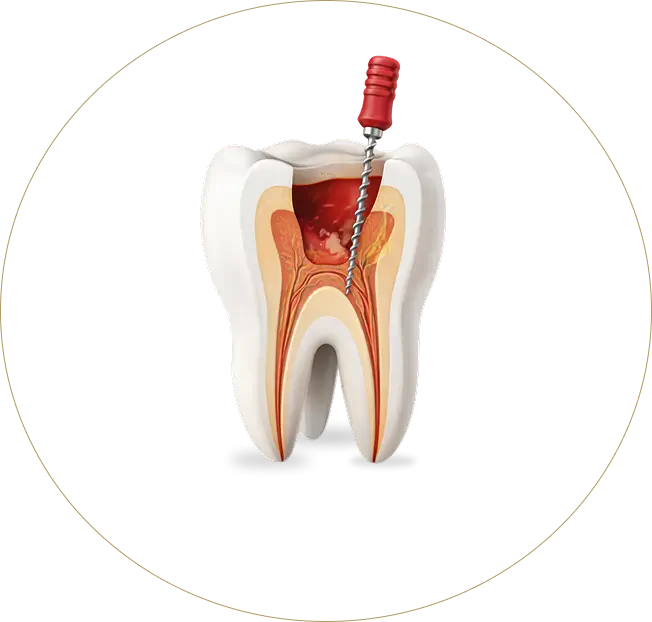
A root canal (or canal root therapy) is a procedure designed to treat infection inside the tooth’s root canal system — the inner chamber that houses your tooth’s nerve and pulp.
When decay, trauma, or infection reach this area, it can cause severe pain, swelling, and sensitivity. A root canal treatment removes the infected tissue, cleans the inside of the tooth, and seals it to prevent further damage.
This procedure not only saves your natural tooth but also helps prevent the need for extraction or more extensive dental work later.
Book an appointment
Why You Might Need a Root Canal
You may need a root canal if you experience:
-
Persistent tooth pain or throbbing
-
Sensitivity to heat or cold
-
Discoloration of the tooth
-
Deep decay or infection visible on X-rays
-
A pimple-like bump on the gums
-
Swollen gums or tenderness
If you’re unsure, our root canal experts will perform a thorough exam and digital imaging to diagnose the issue and recommend the best treatment option for you.
Book an appointmentThe Root Canal Process at Issa Dental Group
We understand that the idea of a root canal can sound intimidating — but rest assured, with today’s modern dental technology and our gentle approach, the procedure is comfortable and straightforward.
Here’s what to expect:
Diagnosis & Preparation
We begin with a comprehensive dental exam and X-rays to assess the infection’s extent. Once confirmed, we’ll numb the area completely to ensure you feel no pain.
Cleaning the Canal
Your dentist makes a small opening in the tooth to access the root canal. The infected tissue and bacteria are gently removed, and the canal is disinfected.
Filling & Sealing
The cleaned canal is filled with a biocompatible material called gutta-percha, which seals it to prevent reinfection.
Restoring Your Tooth
After the root canal, we typically recommend placing (PRESCRIBE) a dental crown over the treated tooth to restore its strength, function, and appearance.
Diagnosis & Preparation
We begin with a comprehensive dental exam and X-rays to assess the infection’s extent. Once confirmed, we’ll numb the area completely to ensure you feel no pain.
Cleaning the Canal
Your dentist makes a small opening in the tooth to access the root canal. The infected tissue and bacteria are gently removed, and the canal is disinfected.
Filling & Sealing
The cleaned canal is filled with a biocompatible material called gutta-percha, which seals it to prevent reinfection.
Restoring Your Tooth
After the root canal, we typically recommend placing (PRESCRIBE) a dental crown over the treated tooth to restore its strength, function, and appearance.
Most visits are completed in a single appointment — fast, comfortable, and highly effective.
How Long Does a Root Canal Take?
In most cases, a root canal treatment takes one to two visits, with each appointment lasting 60 to 90 minutes, depending on the tooth’s complexity and number of roots.
Molars, for example, may require slightly longer treatment than front teeth because they have more canals.
Our team will provide a clear, personalized timeline during your consultation.
Root Canal Recovery: What to Expect
After your procedure, you’ll experience mild tenderness or sensitivity for a few days — this is completely normal and easily managed with over-the-counter pain relief.
During root canal recovery, you should:
- Avoid chewing on the treated tooth until the crown is placed.
- Stick to soft foods for a day or two.
- Maintain good oral hygiene to promote healing.
- Contact us if you experience prolonged pain or swelling.
 Avoid chewing on the treated tooth until the crown is placed.
Most patients return to normal activities the very next day.
Our goal is for your root canal recovery to be fast, smooth, and pain-free.

Root Canal Cost — Affordable, Transparent Pricing
The root canal treatment cost can vary depending on:
- The location of the tooth (front, premolar, molar).
- The complexity of the infection.
- Instant improvement in color, symmetry, and shape.
- Whether a crown is needed after treatment.

Root Canal Retreatment — When Infection Returns
In rare cases, a previously treated tooth may become reinfected. This can happen if:
- The original filling didn’t completely seal the canal.
- A new cavity forms near the treated tooth.
- The tooth sustains new trauma or damage.
When this happens, root canal retreatment can help. Our skilled team will reopen the tooth, clean the canals again, and reseal it to restore full health.
We use digital imaging and advanced endodontic tools for precision and success in every retreatment case.

Why Choose Issa Dental Group for Root Canal Therapy?
At Issa Dental Group, we combine cutting-edge technology, gentle care, and years of expertise to deliver exceptional outcomes.
When you choose us for your root canal therapy, you’ll benefit from:
Experienced root canal experts with advanced endodontic training
Pain-free techniques and modern anesthesia for total comfort
Same-day emergency appointments for urgent cases
Comprehensive follow-up care to support long-term success
Customized crowns and restorations for seamless results
Our focus is on saving your natural teeth — and helping you smile again, pain-free.

Root Canal Before and After: Real Relief, Real Results
A successful root canal doesn’t just eliminate pain — it restores your ability to chew, smile, and live comfortably again.
- Before: Severe tooth pain, infection, or swelling.
- After: Complete comfort, restored strength, and a beautifully natural tooth.
We invite you to visit our office to see real before and after cases and hear patient success stories firsthand.
Book an appointmentFrequently Asked Questions
This is the question most patients ask first, and the honest answer is: not the way you might expect. The procedure is done under local anesthesia, so the tooth and surrounding area are fully numb before anything starts. Most patients are surprised by how little they feel during the appointment. Any discomfort you experienced before the procedure, from the infection or pressure, is typically much worse than the treatment itself. Mild soreness for a day or two afterward is normal and manageable.
Common signs include persistent toothache, sharp pain when biting or chewing, prolonged sensitivity to heat or cold that does not go away quickly, a darkened tooth, swollen or tender gums, or a small bump on the gum near a tooth. That said, some teeth that need a root canal show no symptoms at all and are only picked up on X-rays during a routine exam. If something feels off, it is always worth getting it checked rather than waiting.
If an infected tooth goes untreated, the infection will not go away on its own. It can spread to the surrounding bone and tissue, cause an abscess, and eventually lead to tooth loss. In more serious cases, a dental infection can spread beyond the mouth. Getting a root canal when it is recommended is almost always the better outcome compared to extraction, especially since losing a natural tooth has its own long-term consequences for your bite and bone health.
In most cases, yes. Saving your natural tooth is almost always the preferred option. Natural teeth are stronger and more stable than any replacement, and keeping them avoids the chain of decisions that come with an extraction: whether to get an implant, a bridge, or leave the gap, all of which have their own considerations. A root canal preserves the tooth so it can continue functioning normally, usually for many more years with a crown placed on top.
Most root canals are completed in one to two appointments, each lasting roughly 60 to 90 minutes. Front teeth tend to be simpler and faster because they have fewer canals. Molars at the back of the mouth have more canals and may take a little longer or require a second visit. Your dentist will give you a clear idea of what to expect based on which tooth is being treated.
Recovery is generally straightforward. It is normal to feel some tenderness or mild sensitivity in the area for a few days after the procedure, particularly when biting down. Over-the-counter pain relief is usually enough to manage this. You can typically return to normal activities the next day. Until the permanent crown is placed on the tooth, it is a good idea to avoid chewing hard foods on that side. Most patients find recovery far easier than they anticipated.
In most cases, yes. A root canal removes the pulp and nerve from inside the tooth, which can leave it more brittle over time. A crown restores the tooth's full strength and protects it from cracking under everyday chewing pressure. Front teeth, which experience less biting force, sometimes only need a filling, but back teeth almost always benefit from a crown. Your dentist will recommend the right restoration based on which tooth was treated and its condition.
Retreatment is needed when a tooth that has already had a root canal becomes infected again. This can happen if the original seal breaks down over time, a new cavity develops near the treated area, or the tooth sustains new damage. The process is similar to the original procedure: the tooth is reopened, the canals are cleaned again, and it is resealed. Most retreatments are successful, though in some situations your dentist may refer you to an endodontic specialist for more complex cases.
You will want to wait until the numbness fully wears off before eating to avoid accidentally biting your cheek or tongue. For the first day or two, soft foods are a good idea. After that, you can gradually return to your normal diet, though it is best to avoid chewing directly on the treated tooth until the permanent crown is placed. Once the crown is in, the tooth should feel and function just like the rest of your teeth.
The procedure itself is the same. The difference is the urgency. When a tooth infection causes severe pain, swelling, or an abscess, it needs to be addressed quickly rather than scheduled weeks out. At Issa Dental Group, we keep availability for urgent cases so patients in significant discomfort do not have to wait. If you are in pain, call us and we will do our best to see you the same day.
Expert care for every stage of your dental health.
These treatments are commonly recommended before or after a root canal to restore full tooth health.
Often paired with Root Canals
 Often paired with Root Canals




Made by Dentaloo: Dental Plan Platform